The Science of Iron
Iron is an essential mineral for health and for athletic performance. It plays a role in oxygen transport, energy production, and the functioning of key enzymes involved in muscle metabolism. Put simply: when iron is lacking, the body keeps functioning, but with less capacity to sustain effort, adapt to training, and recover properly.¹²³
Iron deficiency is common among female athletes. The most recent systematic review focused on this population indicates that up to 60% of female athletes may present iron deficiency.³ Iron deficiency anemia is less common than isolated iron deficiency, but it remains clinically relevant: in a recent cohort of university athletes, the prevalence of iron deficiency anemia was 9.9%.⁴
In the sports context, this is particularly important because while iron deficiency can negatively affect performance—especially in endurance disciplines—correcting it may improve aerobic variables in athletes with a true deficiency.³⁵
Are Female Athletes Really at Higher Risk?
Female athletes start from a more delicate physiological situation with regard to iron. In addition to menstrual losses, several sport-related factors contribute:
- increased physiological demand
- possible gastrointestinal microbleeding
- impact-related hemolysis in some sports
- iron losses through sweat
- and absorption that does not always keep pace, especially during periods of high training load.²⁶
Another underlying issue often appears as well: insufficient energy intake or carbohydrate availability below the demands of training. This not only compromises performance; it may also impair iron regulation.
We know that hepcidin, a hormone that reduces intestinal iron absorption and iron mobilization, can increase after exercise and hinder the restoration of iron stores, particularly when physiological stress accumulates.²⁷
You Don’t Need Anemia to Notice the Impac
The most recent systematic review in female athletes concludes that athletes with iron deficiency may experience reduced endurance performance, and that supplementation in those with prior deficiency is associated with improvements, particularly in aerobic variables.³
In practical terms: if an athlete reports persistent fatigue, poorer tolerance to effort, a sensation of “empty legs,” slow recovery, or an unexplained drop in performance, it may not be wise to attribute everything to training volume, stress, or simply being “out of shape.” Sometimes the issue lies in iron stores that have been quietly declining for some time.²³⁸
The Competition Calendar Also Matters
In sports with long seasons or congested competition schedules, iron can become an even more sensitive factor.
In a recent study on women’s Australian football, the prevalence of iron deficiency in the team was 47% at the beginning of the season and 54% at the end, reflecting a deterioration of iron stores throughout the competitive period.⁹
In this context, ferritin is useful because it acts as a marker of iron stores. A decrease in ferritin during the season does not necessarily imply an immediate drop in performance, but it may signal a progressive worsening of iron status and an increased risk of deficiency if not addressed in time.²⁹
Supplementation: Useful, Yes; Automatic, No
Iron supplementation can be a very useful tool when a deficiency is confirmed, but it should not be considered an automatic step or a precautionary “just in case” strategy.
The most recent evidence in athletes shows that oral supplementation mainly improves ferritin levels, and its effects are clearer when initial iron stores are genuinely low. By contrast, benefits on VO₂max or performance are not universal.³⁵
In practice, when an athlete presents low iron stores but not yet anemia, a ferritin level <35 µg/L is one of the references used in sports to guide this situation. If supplementation is chosen, a common strategy is oral iron for 8–12 weeks, often at doses of 100 mg/day of elemental iron, although in women with digestive discomfort, alternate-day dosing may improve tolerance.¹⁰
It is also important to consider how it is taken: it is usually recommended to take iron with a source of vitamin C (such as strawberries, kiwi, or oranges) and separate it from calcium sources (milk, cheese, dairy), coffee, or tea, as these can impair absorption.¹⁰
This is relevant because traditional oral iron is not always well tolerated. Nausea, constipation, and digestive discomfort are relatively common side effects and may lead supplementation to fail—not because it is ineffective, but because the athlete cannot maintain it long enough.¹⁰
In this context, newer formulations such as liposomal iron may be an interesting alternative for women who experience poor gastrointestinal tolerance to conventional oral iron, although their role should mainly be understood in terms of improved tolerance rather than guaranteed superiority in all cases.
Lactoferrin has also gained attention as a potential complementary strategy, particularly in female athletes with poor tolerance to oral iron, in inflammatory contexts—such as congested competition schedules or prolonged gastrointestinal issues—or during pregnancy. However, specific evidence in female athletes remains limited and, at present, it should be considered a supportive strategy rather than a substitute for conventional treatment when a deficiency is confirmed.¹⁰¹¹
So, What Should Female Athletes Take Away From This
Iron is not a minor detail or just another supplement in the drawer. It is a factor that can directly influence:
- how you train
- how you recover
- and how well you perform
In female athletes, the combination of menstruation, training load, low energy availability, and inflammatory contexts can turn a seemingly small issue into a real limitation if it is not detected in time.²³⁶⁸
Do You Suspect Iron Deficiency
The key is not to become obsessed, but to know when it is worth taking a closer look.
If you experience:
- unusual fatigue
- poorer tolerance to training
- slower recovery
- a sensation of empty legs
- or a drop in performance that does not match your training load
and you also have risk factors such as heavy menstrual bleeding, a congested competition calendar, low energy availability, or prolonged gastrointestinal issues, it may be worth investigating further.
In that case, the next step should not be self-supplementation, but consulting your doctor or healthcare professional and requesting a blood test including an iron profile to determine whether iron deficiency is truly present.
In female athletes, not all fatigue is “normal,” and not every drop in performance is solved by pushing harder. Sometimes the body does not need more effort—it needs more attention. Knowing when iron might be lacking, confirming it properly, and acting with sound judgment can make the difference between merely surviving the season and truly performing within it.
Anna Teixidó Aguiló
Registered Dietitian-Nutritionist
Registration Nº: MAD00674
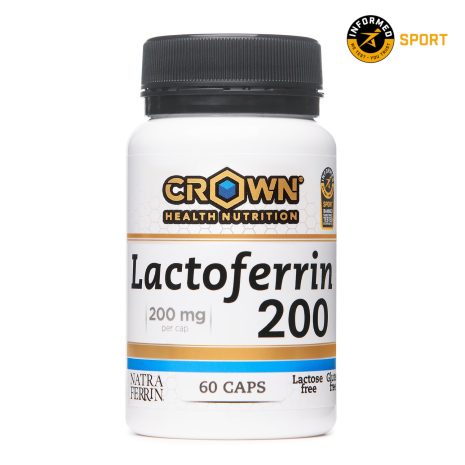
Lactoferrin 200 (Natraferrin®) – 60 Capsules
Lactoferrin 200 from Crown Sport Nutrition is an advanced supplement that provides a minimum of 200 mg of lactoferrin per capsule, from the patented raw material Natraferrin®(from fresh milk).This product is designed for athletes of all disciplines, helping to optimize iron metabolism, accelerate muscle recovery, strengthen the immune system, reduce oxidative stress, and improve gut microbiota health. Its effectiveness is backed by scientific studies published in high-impact journals. Lactose-free and Informed Sport banned substance tested.
*Envío gratis en pedidos superiores a 50€
Frequently Asked Questions About Iron and Female Athletes
Why are female athletes at greater risk of iron deficiency?
Female athletes have a higher risk of iron deficiency due to the combination of menstrual losses, increased metabolic demands from training, and additional losses associated with exercise, such as impact-related hemolysis, gastrointestinal microbleeding, or sweat losses.
How does iron deficiency affect athletic performance?
Iron plays a role in oxygen transport and cellular energy production. When iron stores are low, the body may experience fatigue, reduced tolerance to effort, slower recovery, and decreased performance, particularly in endurance sports.
What symptoms may indicate iron deficiency in a female athlete?
Common signs include persistent fatigue, a sensation of “empty legs,” slower recovery, poorer tolerance to training, or an unexpected drop in performance that cannot be explained by training load.
What ferritin levels are considered low in athletes?
In the sports context, ferritin levels below 35 µg/L are often used as a reference indicating low iron stores, although interpretation should always be made together with other blood markers and under medical supervision.
Is it recommended to take iron supplements without a blood test?
No. Iron supplementation should only be started when a deficiency has been confirmed through blood testing and under the supervision of a healthcare professional, as both deficiency and excess iron may have health consequences.
How can iron absorption be improved when supplementing?
To enhance iron absorption, it is recommended to take iron together with a source of vitamin C and avoid consuming it at the same time as foods or beverages that may reduce absorption, such as dairy products, coffee, or tea.
Can iron deficiency occur without anemia?
Yes. Iron deficiency without anemia is relatively common in athletes. In these cases, iron stores are already reduced and may affect performance even when hemoglobin levels remain within normal ranges.
References
Christofi MD, et al. The effectiveness of oral bovine lactoferrin compared to iron supplementation in
patients with a low hemoglobin profile: A systematic review and meta-analysis of randomized clinical
trials. 2024.
National Institutes of Health, Office of Dietary Supplements. Iron – Health Professional Fact Sheet.
McCormick R, Moretti D, Peeling P, et al. A contemporary understanding of iron metabolism in active
premenopausal females. Sports Medicine – Open. 2022.
Pengelly M, Pumpa K, Pyne DB, Etxebarria N. Iron deficiency, supplementation, and sports
performance in female athletes: A systematic review. J Sport Health Sci. 2025;14:101009.
Inaba H, et al. Iron Deficiency Prevention and Dietary Habits Among Elite Female University Athletes.
2025.
Smid AN, Golja P, Hadzic V, et al. Effects of Oral Iron Supplementation on Blood Iron Status in
Athletes: A Systematic Review, Meta-Analysis and Meta-Regression of Randomized Controlled
Trials. Sports Medicine. 2024;54:1231-1247.
Australian Institute of Sport. How and when do I use it? Iron.
Ishibashi A, Maeda N, Kondo C, Goto K. Energy intake to meet total energy expenditure improves
iron deficiency and metabolic suppression in female long-distance runners: A case series study with
dietary intervention. 2025.
Dugan C, Peeling P, Davies A, et al. The relationship between menorrhagia, iron deficiency, and
anaemia in recreationally active females: An exploratory population based screening study. J Sci
Med Sport. 2024.
Gomes de Albuquerque A, O’Connor D, et al. Putting the Fe into Female Athletes: Insights into
Heightened Iron Status and Women’s Australian Football Performance—A Case Study. 2025.
Australian Institute of Sport. Iron: medical supplement guidance for athletes.