Dr. Fernando Naclerio
Professor in Strength Training and Sports Nutrition
Centre Lead: Centre for Exercise Activity and Rehabilitation Institute for Lifecourse Development
School of Human Sciences
University of Greenwich
Abstract
Glutamine is the most abundant free, amino acid in plasma and skeletal muscle and is considered a conditionally essential amino acid during periods of physiological stress. It plays important roles in nitrogen transport, immune-cell metabolism, and maintenance of intestinal integrity. In physically active individuals, glutamine supplementation has attracted interest because strenuous exercise, heat stress, and heavy training may transiently increase glutamine demands. This short review aimed to summarise the biological relevance of glutamine, evaluate the current evidence for its use in healthy physically active adults, and provide practical recommendations for supplementation. Overall, current evidence does not support glutamine as a routine ergogenic aid to gain muscle mass or enhance physical performance in well- nourished athletes. Its most relevant application appears to be as a targeted short-term support strategy during periods of high physiological stress, particularly when gastrointestinal integrity, recovery from muscle-damaging exercise, or illness risk may be challenged. When used, a practical evidence-informed approach is approximately 0.1 g/kg body mass/day for general support, increasing to around 0.3 g/kg/day during short recovery-focused or hard training phases. Glutamine should complement, not replace, appropriate nutrition, and recovery strategies.
Introduction
Glutamine is a five-carbon neutral amino acid and the most abundant free amino acid in both plasma and skeletal muscle [1,2]. Under normal conditions it is synthesised mainly in skeletal muscle and is usually considered non-essential. However, during illness, injury, heat stress, or heavy physical training demands, endogenous production may not fully match demand, so glutamine can become conditionally essential [2]. For physically active individuals, glutamine is of interest less as a classic ergogenic aid and more as a nutrient that may help support gut barrier integrity and immune function during periods of high physiological stress, with possible downstream benefits for recovery [1].
Biological Function of Glutamine
Glutamine plays several important roles in human metabolism. It acts as a major carrier of nitrogen between tissues, contributes to acid-base balance through renal ammoniagenesis, and provides substrate for nucleotide and protein synthesis [3]. It is also a key metabolic fuel for rapidly dividing cells, particularly small-intestinal enterocytes and immune cells such as lymphocytes and macrophages [4]. Because skeletal muscle is the principal site of glutamine production and storage, prolonged or exhaustive exercise may reduce plasma glutamine concentrations, especially when recovery is inadequate or training stress is high [5]. These functions provide the main biological rationale for considering glutamine supplementation in athletes and physically active individuals [6].
Glutamine Needs and Dietary Sources
In most healthy, physically active individuals, glutamine requirements can generally be met through normal endogenous production together with an adequate intake of high-quality dietary protein from foods such as meat, fish, eggs, dairy products, legumes, and, when appropriate, protein supplements [1,7]. Although protein-rich foods provide glutamine, a substantial proportion of dietary glutamine is metabolised by the intestine before reaching the systemic circulation [5]. However, in healthy physically active individuals, endogenous glutamine synthesis, together with adequate total energy and protein intake, is generally sufficient to maintain glutamine availability and avoid clinical deficiency [3]. Even so, plasma glutamine concentrations may fall transiently after prolonged, exhaustive, or repeated strenuous exercise, particularly during heavy training periods, indicating a temporary increase in glutamine demand rather than a chronic deficiency state [6]. For this reason, glutamine supplementation may be more relevant during short phases of unusually high physiological stress than as a routine strategy for all active individuals [3,6].
When Glutamine Supplementation May Be Needed in Physically Active Individuals
Current evidence does not support glutamine supplementation as a reliable ergogenic aid for maximising muscle mass gain, improving body composition, or enhancing endurance or strength performance in well-nourished athletes [6]. A systematic review and meta-analysis of clinical trials concluded that glutamine supplementation generally had no significant overall effect on immune-cell counts, endurance performance, or body-composition outcomes (e.g., hypertrophy), although some subgroup findings suggested that responses may vary according to the implemented supplementation protocols and supplement form [6]. This interpretation is consistent with studies showing no improvement in resistance-exercise performance after acute high-dose glutamine ingestion [8]. Accordingly, glutamine should not be presented as a universal performance-enhancing supplement, particularly in athletes whose total energy and protein intake are already adequate.
The strongest rationale for glutamine supplementation in sport appears to be in targeted situations involving gastrointestinal and heat stress. Human exercise studies have shown that oral glutamine can attenuate exercise-induced increases in intestinal permeability, including during prolonged exercise and running in the heat [9]. A more recent systematic review and meta-analysis reported no significant overall pooled effect on gut permeability across all included adult studies, but subgroup analyses suggested a benefit with higher doses and shorter supplementation periods [10]. Importantly, that meta-analysis was not athlete-specific and included heterogeneous adult populations, so it should not be overgeneralized to physically active or athletic populations. However, when interpreted alongside the exercise studies, it supports a plausible targeted use in endurance athletes, team-sport players training in hot environments, or athletes prone to gastrointestinal symptoms during heavy training, travel, or congested competition periods [9].
Evidence for recovery and immune support is more limited and remains somewhat mixed. In male judoists, 3 g/day for two weeks attenuated suppression of neutrophil function and markers of muscle damage during intensive training [11]. In another study, 0.3 g/kg/day for 72 hours after eccentric exercise improved strength recovery and reduced muscle soreness [12]. However, not all studies investigating the impact of glutamine ingestion on immune system support its protective effects: for instance, an earlier trial found that maintaining plasma glutamine availability did not prevent the exercise-induced immune changes measured after repeated exercise [13]. More recently, a randomized study in combat-sport athletes reported that three weeks of glutamine supplementation improved salivary Immunoglobulin A, hormonal status, and upper respiratory tract infection incidence after intensive training [14]. Earlier work also suggested that glutamine may enhance whole-body glycogen storage during recovery [15], but later interpretation indicated that this effect was more likely on the hepatic than muscular glycogen, which limits its practical significance as a routine recovery maximising strategy [16].
Overall, glutamine is best viewed as a situational support supplement, most relevant when gut integrity, recovery under high physiological stress, or illness risk are the main concerns, rather than as a consistently effective aid for exercise performance or maximising muscle mass gain [6,16].
Form of Glutamine Supplement
Most commercial glutamine products provide free L-glutamine, usually in powder or capsule form. Powders are often preferred because they allow flexible dosing and can be added easily to drinks or recovery shakes, whereas capsules are more convenient for travel and routine use. Research has also examined glutamine-containing beverages and dipeptide-based forms, but the current literature does not clearly support one supplemental form as universally superior in active populations [6]. A more stable water-soluble dipeptide L-alanyl-L-glutamine has been also proposed with remarkable benefits for hydration-related outcomes, but these findings should not be directly extrapolated to pure L-glutamine powders [17].
In practice, standard free L-glutamine neutral-flavoured powder with no added flavourings, preservatives, colourings, or sweeteners remains the simplest and most widely recommendable option.
Recommended Protocols of Ingestion
From a practical perspective, glutamine is best reserved for short periods of increased physiological stress, such as heavy training blocks, exercise in the heat, or phases associated with gastrointestinal stress. In healthy, physically active individuals, a practical approach is to use approximately 0.1-0.3 g/kg body mass per day, taken either as a single dose 1-2 h before exercise or divided into two to three servings across the day on non-training days (e.g., breakfast, lunch and after dinner) [6]. Doses of up to 0.65 g/kg body mass per day have been reported as well tolerated, but this should be interpreted as a safety threshold rather than a recommended target intake [5].
Safety and Potential Side Effects of Glutamine Supplementation in Humans
The most reported side effects are mild gastrointestinal complaints, such as bloating or stomach discomfort, particularly when large single doses are consumed [18]. Accordingly, higher or prolonged high-dose supplementation should be approached cautiously, as the safety of chronic use is less well established than that of short-term supplementation [5].
Final Conclusion and Recommendations
For healthy, physically active adults, glutamine is best used as a short-term support supplement rather than a routine ergogenic aid. Practical use is most relevant during heavy training, prolonged exercise in the heat, gastrointestinal stress, or congested competition periods [6,9]. An evidence-informed approach is ~0.1 g/kg body mass/day for general support, increasing to ~0.3 g/kg/day during short recovery-focused or hard training phases [5,12]. It should complement, not replace, appropriate tailored nutrition, and recovery.
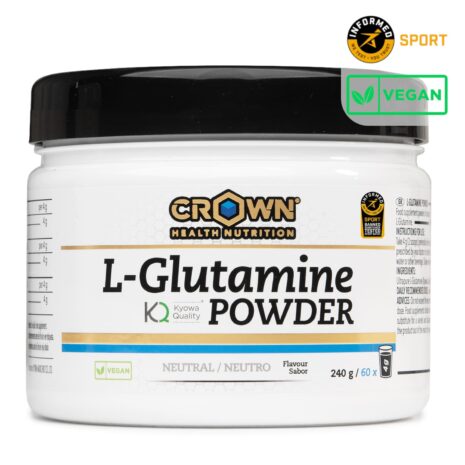
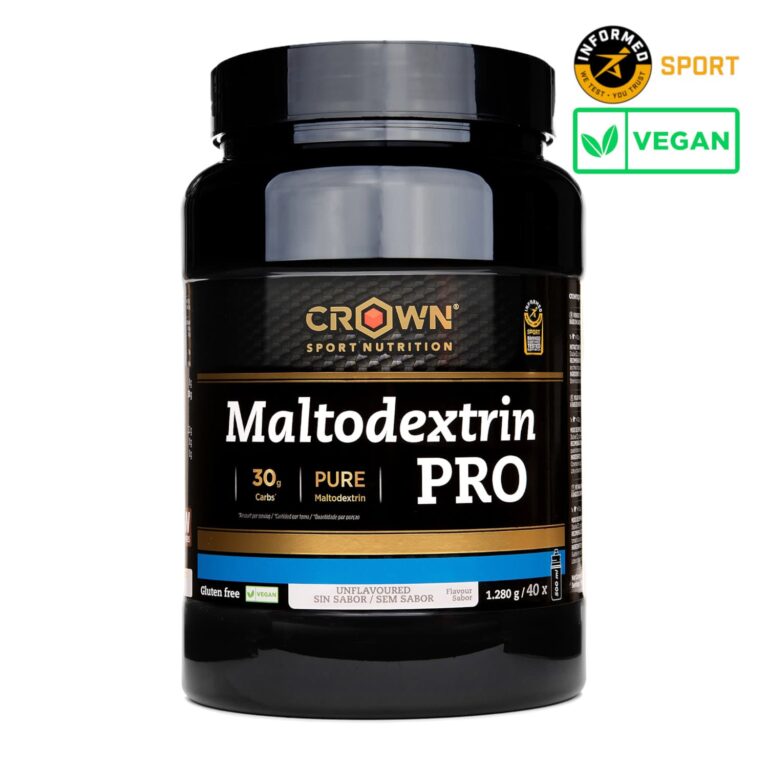
L-Glutamine Kyowa® 240 g – Neutral Flavour – 240 g Tin (40 intake)
L-Glutamine Kyowa® by Crown Sport Nutrition is a maximum-purity glutamine powder, made with Kyowa® Quality raw material, the most demanding standard on the market. It supports the immune system, promotes muscle recovery, and optimizes nutrient absorption after intense training sessions. With Informed Sport anti-doping certification, gluten-free, lactose-free, and suitable for vegans.
*Envío gratis en pedidos superiores a 25€
References
1. Cruzat V, Rogero MM, Keane KN, Curi R, Newsholme P. Glutamine: Metabolism and immune function, supplementation and clinical translation. Nutrients. 2018;10:1–31. https://doi.org/10.3390/nu10111564
2. Hankard R, Mauras N, Hammond D, Haymond M, Darmaun D. Is glutamine a “conditionally essential” amino acid in Duchenne muscular dystrophy? Clinical Nutrition. 1999;18:365–9. https://doi.org/10.1016/S0261-5614(99)80017-X
3. Xi P, Jiang Z, Zheng C, Lin Y, Wu G. Regulation of protein metabolism by glutamine:
implications for nutrition and https://doi.org/10.1109/leoswt.2008.4444364
health. Front Biosci. 2011;1:578–97.
4. Miller AL. Therapeutic considerations of L-glutamine: a review of the literature. Altern Med Rev. United States; 1999;4:239–48.
5. Gleeson M. Dosing and efficacy of glutamine supplementation in human exercise and sport training. J. Nutr.; 2008;138:2045S-2049S. https://doi.org/10.1093/jn/138.10.2045s
6. Ramezani Ahmadi A, Rayyani E, Bahreini M, Mansoori A. The effect of glutamine supplementation on athletic performance, body composition, and immune function: A systematic review and a meta-analysis of clinical trials. Clin Nutr. 2019;38:1076–91. https://doi.org/10.1016/j.clnu.2018.05.001
7. Labow BI, Souba WW. Glutamine. World J Surg. 2000;24:1503–13. https://doi.org/10.1007/s002680010269
8. Antonio J, Sanders MS, Kalman D, Woodgate D, Street C. The effects of high-dose glutamine ingestion on weightlifting performance. J Strength Cond Res. United States; 2002;16:157–60.
9. Pugh JN, Sage S, Hutson M, Doran DA, Fleming SC, Highton J, et al. Glutamine supplementation reduces markers of intestinal permeability during running in the heat in a dose-dependent manner. Eur J Appl Physiol. 2017; https://doi.org/10.1007/s00421-017-3744- 4
10. Abbasi F, Haghighat Lari MM, Khosravi GR, Mansouri E, Payandeh N, Milajerdi A. A systematic review and meta-analysis of clinical trials on the effects of glutamine supplementation on gut permeability in adults. Amino Acids. Springer Vienna; 2024;56. https://doi.org/10.1007/s00726-024-03420-7
11. Sasaki E, Umeda T, Takahashi I, Arata K, Yamamoto Y, Tanabe M, et al. Effect of glutamine supplementation on neutrophil function in male judoists. Luminescence. http://www.ncbi.nlm.nih.gov/pubmed/23348981
12. Legault Z, Bagnall N, Kimmerly DS. The Influence of Oral L-Glutamine Supplementation on Muscle Strength Recovery and Soreness Following Unilateral Knee Extension Eccentric Exercise. Int J Sport Nutr Exerc Metab; 2015;25:417–26. https://doi.org/10.1123/ijsnem.2014- 0209
13. Rohde T, MacLean DA, Pedersen BK. Effect of glutamina supplementation on changes in immune system induced by repeated exercisze. Med Sci Sports Exc. 1998;30:856–62.
14. Lu TL, Zheng AC, Suzuki K, Lu CC, Wang CY, Fang SH. Supplementation of L-glutamine enhanced mucosal immunity and improved hormonal status of combat-sport athletes. J Int Soc Sports Nutr; 2024;21. https://doi.org/10.1080/15502783.2023.2300259
15. Bowtell JL, Gelly K, Jackman ML, Patel A, Simeoni M, Rennie MJ. Effect of oral glutamine on whole body carbohydrate storage during recovery from exhaustive exercise. J Appl Physiol. 1999;86:1770–7. https://doi.org/10.1152/jappl.1999.86.6.1770
16. Rennie MJ, Bowtell JL, Bruce M, Khogali SEO. Interaction between glutamine availability and metabolism of glycogen, tricarboxylic acid cycle intermediates and glutathione. J. Nutr.; 2001;131:2488S-2490S. https://doi.org/10.1093/jn/131.9.2488s
17. Hoffman JR, Ratamess NA, Kang J, Rashti SL, Kelly N, Gonzalez AM, et al. Examination of the efficacy of acute L-alanyl-L-glutamine ingestion during hydration stress in endurance exercise. J Int Soc Sports Nutr. 2010; https://doi.org/10.1186/1550-2783-7-8
18. Ogden HB, Child RB, Fallowfield JL, Delves SK, Westwood CS, Millyard A, et al. Gastrointestinal tolerance of low, medium and high dose acute oral L-glutamine supplementation in healthy adults: A pilot study. Nutrients. 2020;12:1–13. https://doi.org/10.3390/nu12102953